Showing posts with label emergent. Show all posts

Sex God: Exploring the Endless Connections between Sexuality and Spirituality Review

Sex God: Exploring the Endless Connections between Sexuality and Spirituality
Average Reviews:

(More customer reviews)
First of all, this book is not so much about that, despite the title. The title almost immediately sets you up for an anti-climactic rest of the book. The title is good marketing, but not necessarily truth in advertising. This is ok. Buying this book is not about that.
Think about why you bought it first. You bought it because you really like Rob Bell, and in your mind you run through conversations that you'd like to have with him when you two are hanging out at Starbucks, which I'm sure he'll have time for. Given that that's what this is about, just realize that you're getting the next best thing. You're hanging out with him. He's talking about what's on his mind. You get to listen in. Even though it's a monologue, it kind of scratches that itch that all of his fans have been having.
So for that reason, it's a pretty good book.
In keeping with the postmodern, emergent ethos, which Bell leads while disavowing, the book is not linear. He starts out with a provocative introduction which broaches the sacramental without using that word, and then a powerful first chapter that reaches into our deepest longings for the dignity for which we were created. Immediately we are on board and want more. Particularly in hopes that he gets to the s-e-x.
The second chapter skirts around our "disconnection" from the created order, which makes me wonder if we're walking through a systematic theology of creation, sin, salvation (I was soon dissuaded). I'm also wondering if we've taken on a neo-Tillichian doctrine of sin-as-victimization, but I don't think the book's theology is quite so intentional.
The third chapter I like even better, as a modern discourse on the first three chapters of Genesis and the thoughtful suggestion that our sexuality is poised between our place as animal and angel, as physical and spiritual beings. Now I'm really into this book. Chapter four plays with the temptations and addictions that throw us off course from that dignity we wanted at first. Chapter five looks at our reaching out for love to fix the hurt, portrayed through the clever and playful illustration of a little girl running away from Rob Bell when he asked her to dance in Junior High. I think we're supposed to say, "Oh, good choice, girlie, look where you'd be now." The cross is God's act of making himself vulnerable to our rejection in the same way.
Now here's the break. From here on out, the structure is not too clear to me, and, from what I read, to other reviewers. Six is about couples needing to submit to each other rather than women to men. Seven is (subtly) about retaining the mystery of sex within marriage. Eight is about loyalty, nine is an implied analogy between heaven and marital intimacy, and ten is an offer of forgiveness for those who have failed.
Then I realized what I was reading. It's not systematic theology; it's the emergent "Why Wait?" program. Which is fine. I just wanted to hang out with Rob Bell, and when I got the chance, he had sex on his mind. Cool. I like listening to him, whatever he's talking about.
My only two suggestions for his third book are these. First, the endnotes are not cute, and it is not impressive to see how many books you can recommend. They perforate a book that already requires attention. Secondly, pensees do not need to be released in hardback at twice the cost of a paperback.
Those aside, it's a worthwhile recommendation for the religiously exposed who don't really understand Christian mores regarding physical intimacy.

Click Here to see more reviews about: Sex God: Exploring the Endless Connections between Sexuality and Spirituality


Buy NowGet 38% OFF

Click here for more information about Sex God: Exploring the Endless Connections between Sexuality and Spirituality

Read More...

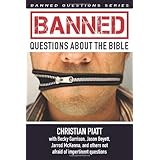
Banned Questions about the Bible Review

Banned Questions about the Bible
Average Reviews:

(More customer reviews)
I am thoroughly enjoying this book. Christian Piatt has compiled an interesting group of 16 great communicators (including himself) to answer questions that I think most people want to ask, but don't or won't. The responses to the various questions include historical facts along with uniquely personal views of each writer. The 1/2 to 1 page answers are brief but powerful. Reading only one person's answer to one question can fuel an individual contemplative quiet time or a full blown discussion with friends/family/church members. AND it is funny. I genuinely like this book and am looking forward to Mr. Piatt's next book; sign me up!

Click Here to see more reviews about: Banned Questions about the Bible


Buy NowGet 32% OFF

Click here for more information about Banned Questions about the Bible

Read More...

They Like Jesus but Not the Church: Insights from Emerging Generations Review

They Like Jesus but Not the Church: Insights from Emerging Generations
Average Reviews:

(More customer reviews)
Everyone who takes the Christian faith seriously should read this book and be prepared to do some sober reflection. Whether a pastor, youth worker, elder, deacon, lay leader, or church member - those who take Dan Kimball's book to heart may very well need to make some significant changes in their approach to outreach and evangelism.
In They Like Jesus But Not The Church, Dan Kimball first points out the convicting and humbling truth that the longer one is a Christian, the less likely one is to have significant friendships with those who are not Christian. Instead, most Christians today find their lives consumed with church-related activities - and those whose primary jobs are ministry-related are often the worst offenders. How can anyone know what the needs of the unchurched are unless they are involved in trusting relationships with them?
The church in America has become nearly irrelevant to most 20- and 30-somethings. Yet those who follow Jesus rarely venture outside our cozy Christian comfort zones to learn why. Unless individual Christians are actively engaged in open and trusting relationships with non-Christians (without a conversion agenda), the life-changing gospel message won't effectively be spread merely by changing our worship service structure, format, or atmosphere. Furthermore, most Christians tend to compound the problem by generally taking one of two approaches to evangelism: either we see every non-Christian as a potential target, and if we spend any time with them at all the goal is to "seal the deal;" or we isolate our faith from our everyday lives and generally avoid faith- or church-related conversations with anyone other than our church friends.
One of the biggest strengths of this book are the voices of many people (most in their 20s and 30s) with whom Dan Kimball has spent hours in conversation. He has developed trusting relationships and most importantly has really listened to where they're coming from when they talk about Jesus, the church, and Christians. Dan's goal was not to convert them, but to hear them. And likely, in doing so, he began to remove some of the stereotypes about Christians and the church that they might have held.
It is surprising and refreshing to learn of the positive and often even accurate views many people outside the church have about Jesus. In general, they deeply respect him and his teachings. But they see the church as very un-Christlike, and the church must not ignore their perceptions and feelings. Whether or not their ideas about the church being homophobic, male-dominated, judgmental and negative, or having a political agenda are true of all churches or any single church, the reality is that these perceptions are a significant barrier to trust in the church and acceptance of Christianity.
Dan does not compromise his orthodox beliefs as he interacts and engages with the people and the issues, and neither does he advocate that any church or individual compromise. But he is willing to ask difficult questions - questions that any serious Christian should consider. At the end of each chapter are excellent discussion questions which challenge and provoke thought about specific issues, about the reader's own attitudes and perceptions, and about ways the reader might take action.
This book has deeply challenged me, and I highly recommend it to anyone who is serious about our great commission to make disciples out of all nations. They Like Jesus But Not The Church is a reminder to me that God is indeed working in the world, and that I am called to be in relationship with people at all points in their journey of faith, doing what I can to help point the way to Jesus, yet trusting that each person is ultimately in God's hands.


Click Here to see more reviews about: They Like Jesus but Not the Church: Insights from Emerging Generations


Buy NowGet 33% OFF

Click here for more information about They Like Jesus but Not the Church: Insights from Emerging Generations

Read More...