Showing posts with label theology. Show all posts

Evangelism Is . . .: How to Share Jesus with Passion and Confidence Review

Evangelism Is . . .: How to Share Jesus with Passion and Confidence
Average Reviews:

(More customer reviews)
If you love the Lord, call yourself a Christian or simply want to live a better life, you need to read this book. It might sound like it's simply about telling people about Christ, but it's so much more than that. Reading it makes me want dozens of copies just to hand out to everyone I know. It's that good.

Click Here to see more reviews about: Evangelism Is . . .: How to Share Jesus with Passion and Confidence

Evangelism Is . . . contains forty brief chapters of high-octane, rut-breaking equipment, empowerment, and encouragement for all who are ready to share Jesus more passionately and confidently with others. Each call-toaction entry stands alone but can easily be connected to other chapters, all of them finishing the sentence that begins with the book's title. For example, Evangelism Is . . . "Joyfully Intoxicating," "The Real Business of Life," "The Supreme Challenge of This Generation," "Leading People to True Conversion," "Washing Feet," "Praying Prodigals Home," "Empathy with Action," "Giving a Logical Defense of Your Faith," "A Family Affair," etc.The book's appendix also includes articles on what evangelism is not, evangelism in the early church, and sharing Jesus, plus sample plans for sharing one's faith.

Buy NowGet 35% OFF

Click here for more information about Evangelism Is . . .: How to Share Jesus with Passion and Confidence

Read More...

I Don't Have Enough Faith to Be an Atheist Review

I Don't Have Enough Faith to Be an Atheist
Average Reviews:

(More customer reviews)
THE BOOK:
I am an agnostic who is looking for something to believe in. I have searched for years now, and generally am met with lukewarm explanations and radical fundamentalism from both camps. I am not self-righteous or pig-headed enough to categorically dismiss atheist or religious arguments simply because their tone bothered me, but it does get tiresome to be on the receiving end of what is usually more bitterness and dogmatic posturing than any kind of intelligent thought or reason.
Again, I'm talking about atheists as well as religious zealots.
Which is why I enjoyed this book so much.
This is a concise, well-crafted, thoughtful and thought-provoking piece of work. There is real insight to be gleaned from the pages, and although the sum total isn't what any open-minded person would call 100% convincing, it definitely gets much closer than anything else I've discovered.
There is much talk about this book setting up straw men to be knocked down, and although the book does do that on a few occasions, it is by no means what the ultimate premise is based on. In fact, although there were some sketchy arguments and hastily covered bases, and although there were explanations missing and topics omitted, I still felt, on the whole, that it was one of the more successful books I've read from either camp.
The tone (while every once in a while devolving into brief moments of snideness and cockiness) is generally quite intelligent and emotionally removed. There is little here that is bullying or smug, and for that I was grateful. It leant the text, with its vast array of debates and discussions, a snappy and no-nonsense delivery that helped elucidate the more hazily understood, philosophical explanations.
Although, in the end, I wasn't entirely convinced by the book, I was pushed much closer to being convinced than I have yet by any book, religious, atheistic, or otherwise.
THE CRITICS:
In the course of my research, I read the reviews and the comments made by consumers on Amazon.com in order to determine how best to spend my money. I don't want to buy an atheist or christian apologetic book if what I'm going to get is watered down theories and trite cliches.
At this point, I think it would be appropriate to point out that this is, in fact, a forum for discussing the merits of the product, and not the merits of the beliefs or arguments espoused within. I understand that it's hard to remove the deeper values of the work from the work itself, but it can be done. So, if, for instance, if you are an honest consumer, you can point out the cinematic brilliance of films like the Last Temptation of Christ in spite of what that film may or may not say about the religion you may or may not adhere to.
I was dismayed by how many inflammatory and rather pointless criticisms I found for this book. I'd never read it, but I could tell by the tone and stance of the reviews that they were reacting more out of indignation toward the subject matter than out of any knowledge of the text itself. One reviewer scorned the book for being written by David Limbaugh, when the man only wrote the forward. Another person decried the book for being "all about politics," when, as far as I could tell, there wasn't a word about politics, just beliefs or the lack of them.
If you are a critic of christianity, that's fine. Trust me, I understand your point of view. But your clumsily summarized view points and your indignant rebuttals do little to enlighten people who may be interested in buying this book. There are forums in which you can openly discuss and debate these topics, but this is not one of them. This is about saying whether or not the book is worth buying. Instead of doing that, most of you have instead attempted to explain your own beliefs, as if you want to write your own book in response to Christianity, but can't be bothered.
For someone such as myself, looking for intelligent and candid help with the question of Larger Purposes (or their absence), your poorly worded rants and emotional appeals -- especially those of you wearing your rage on your sleeve -- do nothing to help me. For future reference, if you really want to help someone like me understand your points of view, instead of typing out some sloppy summation or more key-worded dismissals (argument from ignorance! straw men!), perhaps you could actually RECOMMEND A DIFFERENT BOOK.
I am always on the lookout for some way to increase my knowledge of the world, and my knowledge of what that world may do to better explain the validity or non-validity of any religion. Unlike many of you, though, I haven't been convinced yet, either way. I read your reviews in the hopes that you may be able to point me down the same path that led to your own enlightenment of absolute certainty, but all most of you did was make vacuous complaints about the book and then insult people who might actually believe or buy it.
So, if you've come online to write a scathing review or to tear apart the praisers of this book, go right ahead. But keep in mind that your own viewpoints -- as right or wrong as they might be -- are less welcome than your criticisms of the actual book in question. And if you DO think you've got it all figured out, and if you DON'T think this book does, you could at least try to share that knowledge by pointing someone like me in the right direction, and by doing that without the same snobbish condecension that you sometimes find in the relgious believers whom you so adamantly decry.

Click Here to see more reviews about: I Don't Have Enough Faith to Be an Atheist


Buy NowGet 48% OFF

Click here for more information about I Don't Have Enough Faith to Be an Atheist

Read More...

Jesus Among Other Gods: The Absolute Claims of the Christian Message Review

Jesus Among Other Gods: The Absolute Claims of the Christian Message
Average Reviews:

(More customer reviews)
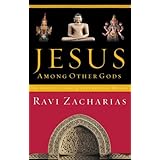
I write this mainly in response to the first review of this book. The person's first critique of the book was that Ravi had treated Buddha as a god, whereas he was not nor did he claim to be. Two quotes from the book I think will suffice to show how this misrepresents the ideas expressed in the book, and begs the question, has this person read this book, and if so, how carefully did they read it?
On page 5, Ravi refers to Buddhism as a "non theistic, if not atheistic religion." Again on page 90 in reference to Buddha's stance on allowing women as disciples, Ravi says, "Whatever one may make of all this, we must be clear that in a non-theistic system, which Buddhism is...."
Implicit in both of these statements is the realization that Buddha did not claim divine status, rendering the argument made by the first reviewer inaccurate.
I found the book to be compelling, and the information presented, clearly demonstrated the uniqueness of the message of Christ when contrasted against other prevailing worldviews.
In reference to the comment about Ravi's hypocrisy, I would merely point out the lack of differentiation between an argument and a person. If indeed one man fails to live up to the claims of Christ, which the bible clearly states is impossible for man without divine intervention, the message itself is not compromised. Especially when the inability of man to do so is implicit in the message. The message of Christ stands on its own even in light of the attacks of its critics from all sides, and in light of the failure of His followers. (It should be noted that I am not at all implying that Ravi is a failure.)
First, the first reviewer is basing his/her claim of Dr. Zacharias' hypocrisy on a request in a review that he may never see, responding to a person who included no address to which to mail a check.
Second, The argument is based on a person's obedience to a command; not the validity of the one who gave the command, therefore, the criticism fails to disprove the christian message.
Third, the argument seems to be a verbal smokescreen composed of second-hand doubt to hide behind in order to justify the refusal to come to terms with the personal implications of the christian message being true. I mean this in no way to offend the reviewer.
The book, which I think was excellent, discussed how Jesus' claims are unique, and would not have been made by the founders of any other religion. My personal favorite chapter was entitled "a taste for the soul." In this chapter, Ravi points out how Jesus constantly pointed people to a need that was deeper than their physical hunger, to a spiritual hunger that everyone has. He goes on to say that when Jesus says he is the bread of life he is establishing himself as the source of satisfaction, and is actually positing himself as his message. In other words Jesus doesn't point us to satisfaction; he is our satisfaction. As Ravi points out, other founders of religions offer ways to peace or satisfaction, etc., whereas Jesus says," I am the way."
I have consistently found Ravi's writings to be stimulating reading, engaging both the heart and the mind. I would heartily recommend this book to both Christians who are looking for help in learning to defend their faith, and to nonchristians who may be trying to see if the Christian worldview is indeed an intellectually coherent one. As Ravi points out doubt is often a product of ones background every bit as much as faith often is. So the automatic dismissal of anything supernatural often carries with it as many prejudices and presuppositions as faith is accused of carrying. So to anyone who will come and read objectively, I believe you will find a compelling case that the claims of Christ are intellectually tenable, and healing to the soul.

Click Here to see more reviews about: Jesus Among Other Gods: The Absolute Claims of the Christian Message


In his most important work to date, apologetics scholar and popular speaker Ravi Zacharias shows how the blueprint for life and death itself is found in a true understanding of Jesus.With a simple yet penetrating style, Zacharias uses rich illustrations to celebrate the power of Jesus Christ to transform lives.Jesus Among Other Godscontrasts the truth of Jesus with founders of Islam, Hinduism, and Buddhism, strengthening believers and compelling them to share their faith with our post-modern world.


Buy NowGet 32% OFF

Click here for more information about Jesus Among Other Gods: The Absolute Claims of the Christian Message

Read More...

Hillel: If Not Now, When? (Jewish Encounters) Review

Hillel: If Not Now, When (Jewish Encounters)
Average Reviews:

(More customer reviews)
Hillel may be the only ancient rabbi that most Jews, and many non-Jews, have heard of. The Jewish outreach program on many university campuses is named after this famous rabbi. And many people have also heard (part of) Hillel's famous statement summarizing the Torah while standing on one foot: "What is hateful to you, do not do unto others." But, as Rabbi Joseph Telushkin lucidly explains, there is a very great deal more to Hillel's life and work.
And not only is there more, Rabbi Telushkin argues, much of Hillel's core teaching is a) more relevant to the Jewish condition than it has been at any other time in the past 2000 years, and b) most Jews, including perhaps even most practicing rabbis, do not appreciate or act upon these core teachings.
Hillel taught many important lessons. I will discuss only one of them here. To learn about the others, and to learn far more detail than I can mention here, I urge you to read Rabbi Telushkin's well-written book Hillel: If Not Now, When? (For those familiar with his recent works on ethics, this book is much shorter, and although it will reward careful study, can be read through like a biography.)
Hillel is best-known for the above quoted statement of the golden rule. But as Rabbi Telushkin observes, the context of the quote, as well as the complete quote, are much less well-known.
The context is that Hillel is responding to a pagan who has approached him and requested that Hillel convert him to Judaism, and explain the Torah to him while standing on one foot. Hillel agrees! While such openness to conversion might not surprise a Christian, it does surprise most Jews, including most rabbis, today. Rabbi Telushkin is obviously troubled by the modern Jewish antipathy toward interested non-Jews. Citing Hillel, Telushkin argues that in societies that permitted it, Jews were very open to potential converts.
With the Roman destruction of the second Temple in the year 70, and the subsequent expulsion of the Jews from the Land of Israel, Jews found themselves almost everywhere among more or less hostile hosts. For much of this time, in both Christian and Muslim lands, conversion to Judaism was punishable by death. In fact, still today, conversion out of Islam is punishable by death in many parts of the Muslim world. Over these many centuries of oppression, Jews adopted the idea of resistance to accepting converts.
Telushkin presents a strong case, based on Hillel, that this resistance, while understandable, is an aberration. In addition to the famous one-foot story, Telushkin presents two other similar stories in which Hillel quickly accepts people who wish to convert. However, in each case, it is clearly understood that once they convert, they will need to learn more.
In fact, this immediate acceptance, before learning or study, is how most Jews alive today became Jews: they were immediately accepted into the Covenant knowing little or nothing about it, and they were then expected to learn about it. That is simply another way of saying that Judaism accepts young children as Jews if they happen to be born to a Jewish mother. These Jews, having been immediately accepted before they study extensively, remain Jews, regardless of whether they ever learn or practice anything Jewish.
Rabbi Telushkin is gently observing that the practice of being hostile to converts, as so many Jews today are, is a) inconsistent with historical teaching and practice pre-Roman-expulsion b) inconsistent with the often stated goal of keeping the Jewish community thriving and c) unfair and hurtful, since it discriminates against some people based on an accident of birth.
The close of the famous one-foot story is: "Now go an learn." A good place to start is Hillel: If Not Now, When?


Click Here to see more reviews about: Hillel: If Not Now, When (Jewish Encounters)


Buy NowGet 32% OFF

Click here for more information about Hillel: If Not Now, When (Jewish Encounters)

Read More...

Yours, Jack: Spiritual Direction from C.S. Lewis Review

Yours, Jack: Spiritual Direction from C.S. Lewis
Average Reviews:

(More customer reviews)
I'm a compulsive C.S. Lewis collector and, if you're even thinking about buying this book - I'll bet it's not the first volume of Lewis that you'll place upon your shelf, either. His life was so complex, his imagination so expansive and his faith so deep that I find myself drawn toward his often strange and ultimately triumphant life over and over again. I've collected virtually all of his books and nearly all of the main titles written about him over the years. I even own the big 3-volume collection of his letters.
So, why buy this new book if your "Lewis shelf" looks even a little bit like the overflowing Lewis section in my library?
I think there are a couple of reasons that this book is a great new offering: First, most of us are hesitant to purchase, let alone slog all the way through, the big 3-volume set. I'll admit that, while my set of the letters has some turned-down corners here and there - I haven't waded through those volumes cover to cover to cover to ... Well, you get the point.
Second, we love reading letters, don't we? Letters are foundational in the world's great religions. Our revelations come to us, quite often, in the form of epistles. The New Testament books are mostly letters. As a journalist and editor myself for more than 30 years, I've written thousands of letters (now Emails and posted epistles) and I've received, edited and published thousands of readers' letters. I can tell you this - there are few books with the impact of a well-written, well-timed letter.
And, third, Paul F. Ford has pulled into these nearly 400 pages a most intriguing, sometimes troubling and always fascinating thematic collection of "Jack" Lewis' letters concerning "spiritual direction." In a very brief introduction, Ford outlines his choices as falling into three categories: "spiritual companionship" (letters to friends on spiritual matters), "spiritual discipleship" (letters Lewis wrote seeking advice) and "spiritual direction" (letters in which Lewis gave advice).
Ford turns this book into a great choice for seasonal reading - forming a kind of pathway of letter-shaped stepping stones out of Lewis' expansive and, quite often, very messy life. Ford is handing us a book that small groups, including Sunday-morning classes, could divide into chunks for at least a two-month study of Lewis and the spiritual legacy of such letters.
Curiously, HarperOne gives Ford precious little space in this book - or perhaps Ford chose not to step too prominently into the path of readers who are eager to encounter Lewis, rather than the editor. Nevertheless, it's important, especially if you're thinking about buying this book, to realize that you're in the hands of widely acknowledged Lewis scholar.

Ford has feet firmly planted both in Catholic and Protestant worlds. He likes to point out that he was the first Roman Catholic in the doctoral program at Fuller Theological Seminary in Pasadena - and he now is a professor of theology and liturgy at St. John Seminary in Camarillo, California. In his spare time, he rolls out Lewis books that I - among thousands of others - keep picking up and enjoying.
He's the creator of one of my own most-thumbed Lewis volumes, the thick little paperback, "Companion to Narnia." I also recommend that book - if you're jumping into that delightful fantasy realm along with millions of other Americans in this era of Narnian revival.
The important point here is that whatever your religious orientation may be as you think about Lewis - and think about this book and its themes - you're in firm hands here whether you're a newly minted evangelical, a curious mainliner or an active Catholic hoping to stir up your parish's adult education program.
Finally, let me point out a couple of personal "favorites" within this new collection.
I love the final section of the book. It's quite well known now among Lewis fans that he died on the same day President John F. Kennedy was assassinated half a world away. JFK's passing completely eclipsed Lewis' passing in global media. And, oddly enough, reading these letters that Ford has excerpted for us -- notes scattered throughout the months of Lewis' demise - I suspect that Lewis himself wouldn't have cared an iota that his death dropped from the front pages. Oh, Lewis loved the media limelight. But, for Lewis, at the actual point of his death -- his own story already had unfolded. His final letters clearly make the case that he had enjoyed the great adventures of his life and settled matters peaceably as he approached these final days.
There's a 1963 letter to a friend here in which he writes that preparation for death "means stripping off that body which is tormenting you: like taking off a hair-shirt or getting out of a dungeon. What is there to be afraid of?" Amazing. Death as "getting out of a dungeon," penned by a dying master of dungeon lore.
And, then, leaping back into the middle of the book: Some of this may be a revelation to you if you haven't read many contemporary spiritual memoirs (and I'm thinking here of the writings left behind by saints such as Dorothy Day). But, in the heart of the book, you'll find that Lewis' amazing life wasn't constructed as one continuous cruise through mystic inspiration. Quite the contrary! Real saints like Lewis, Day and others admit that spiritual life is full of fumbles, dead ends and silences.
I especially recommend a letter penned in 1948 in which Lewis begins by advising his friend: "I very much doubt if I'm good enough at prayer myself to advise others." And then, as he begins to offer his thoughts, friend to friend, he writes like this: "Of course it is very difficult to keep God only before one for more than a few seconds. Our minds are in ruins before we bring them to Him and the rebuilding is gradual."
This is a hefty little book at nearly 400 pages and perhaps not a typical choice for small groups - but I would urge you not to miss this great and often strange spiritual adventure with our old friend, Jack.


Click Here to see more reviews about: Yours, Jack: Spiritual Direction from C.S. Lewis


Buy NowGet 25% OFF

Click here for more information about Yours, Jack: Spiritual Direction from C.S. Lewis

Read More...

When Bad Things Happen to Good People Review

When Bad Things Happen to Good People
Average Reviews:

(More customer reviews)
In a time when so many people are striving for an explanation of why their lives turn out a certain way, or why things (good or bad) happen to them, the expressions "it's all part of God's plan," "everything happens for the best," or "it just wasn't meant to be," and so on, have became a little tiresome. In "When Bad Things Happen to Good People," Rabbi Harold S. Kushner offers a refreshing point of view that differs from those who think everything occurs on earth because God wants it that way, and at the same time provides a surprising comfort in the fact that events actually can, and do, take place for no reason at all.
I read the original version of this book in the early 80's (several times since), and what struck me was that Rabbi Kushner was able to reconcile a common Judeo-Christian view of God and causality with a perspective of life that holds a place for randomness and happenstance. Yes! Things happen in life that God has nothing to do with, and there is a way to find peace in accepting this. For those who enjoy contemplating and discussing the purpose of life, faith, and good & bad, you MUST read this book . . . then set aside some more time for thought and conversation.
If you've ever experienced the untimely loss of a loved one, or been through any traumatizing life experience, get this book. It is personal, thought-provoking, well-written, and very easy to understand. I am certain you will find comfort.
If you're just simply interested in learing about God and the meaning of things in your life from a wonderful man and a great writer, get this book. Without intending to write a best-seller (read his Preface), Rabbi Kushner was able to put into words what I had been trying to figure out (despite loads of "help" from others) concerning God, how we should relate to Him, and what to do about all the things that happen to us during our lives.
This book is important; I give it my highest recommendation.

Click Here to see more reviews about: When Bad Things Happen to Good People


Buy NowGet 43% OFF

Click here for more information about When Bad Things Happen to Good People

Read More...

Three Views on the New Testament Use of the Old Testament (Counterpoints: Bible and Theology) Review

Three Views on the New Testament Use of the Old Testament (Counterpoints: Bible and Theology)
Average Reviews:

(More customer reviews)
The book begins with an introduction by Dr. Jonathan Lunde which serves to frame the interaction which follows. He identifies the central question as being the relationship between the Old Testament and the New Testament authors' intended meaning. Surrounding this central issue he identifies five "orbiting questions":
1. Is sensus plenior an appropriate way of explaining the NT use of the OT?
2. How is typology best understood?
3. Do the NT writers take into account the context of the passages they cite?
4. Does the NT writers' use of Jewish exegetical methods explain the NT use of the OT?
5. Are we able to replicate the exegetical and hermeneutical approaches to the OT that we find in the writings of the NT? (12)
The participants in this discussion (Walter Kaiser, Darrell Bock, and Peter Enns) articulate their positions by addressing these questions and by illustrating how their view works in particular biblical texts.
First, Walter Kaiser argues for the "single meaning, unified referents" view. Whereas many scholars see a problematic disparity between the NT authors' meaning and that of the OT authors, this perspective claims that closer exegetical investigation reveals complete harmony between the two. Kaiser goes even further down this line of thinking by arguing that the Old Testament writers understood where their prophecies were moving. Consequently, he rejects any appeal to sensus plenior or to the use of Jewish exegetical methods to explain any supposed tension.
Second, Darrell Bock argues for the "single meaning, multiple contexts and referents" view. While acknowledging that there is disparity between the NT and the OT meanings, he nevertheless argues that they are fundamentally connected. He makes this move through employing the distinction of "sense" and "referent." While there may be a disparity on the level of "referent," there is a unity on the level of "sense." Therefore, like Kaiser, he seeks to vindicate the NT authors' reading of the OT. However, unlike Kaiser, he is quite willing to appeal to sensus plenior and to the use of Jewish exegetical methods in order to explain what the NT authors were doing.
Third, Peter Enns argues for the "fuller meaning, single goal" view. Out of all three views, Enns allows for the greatest amount of tension between the meaning of the OT and NT authors. Although he affirms that we must factor in the questions of sensus plenior and typology, he rejects the usage of these concepts to attempt to remove this tension. On the contrary, he claims that the NT authors did not always respect the context of the OT passages to which they refer. However, he agues that this isn't a problem because they used Jewish exegetical methods which were appropriate to their time and context, and most importantly, because they properly read the OT Scriptures with a "Christotelic" hermeneutic.
Dr. Kenneth Berding then concludes the book by offering a summary of these three positions (with a very handy summary chart on page 240), by noting the "benefits" and "potential problems" of these three views, and by offering a "probing question" to each of the contributors.
Three Views on the New Testament Use of the Old Testament is an excellent introduction to this topic and I highly recommend it. Dr. Jonathan Lunde and Dr. Kenneth Berding are particularly to be thanked for the following reasons.
First, the project which they have undertaken here is much needed. Those who have given the topic of the NT's use of the OT some attention will know that it is one of the most challenging and yet most fruitful areas in biblical studies. Beyond the obvious essential of doing good exegesis of both Old and New Testament texts, it further requires of students that they give particular attention to textual, hermeneutical, and canonical considerations. Beyond this, beginners are faced with the challenge that there is relatively little introductory level secondary literature in this area. This book helps to fill this gap in the literature by providing students with a substantial yet accessible introduction to this subject.
Second, although books of the "Counterpoint" variety aim to introduce to the major viewpoints rather than to break any new ground on their subject, the framework for this topic outlined by Dr. Lunde in his introductory chapter (i.e., the central question with its five "orbiting questions") provides readers with a new way to break down the issues in order to more effectively organize their thoughts and determine where they stand. This point could easily be overlooked, but it is worth noting. Whereas many of the other counterpoint volumes have topics in which there are already clearly delineated positions, such is not the case with this topic. While there have been some attempts to do this (see, for example, Darrell Bock's own attempt: "Evangelicals and the Use of the Old Testament in the New [part 1]," Bib Sac 142:567 [Jul 1985], 209-223), there have not been many. In any case, I believe that readers will find Lunde and Berding's approach to be especially helpful.
Rather than delve into a few of my somewhat minor criticisms and my general disappointment with Kaiser's contribution, I conclude this already overly lengthy review on a more appropriately positive note--a quote from Dr. Lunde: "If the church wakes up to this dimension of the NT use of the OT, it will recover the profound perspective that the first Christians had in relation to Jesus--a perspective that enlivened a mission that changed the world." (http://www.christiansincontext.org/2008/11/interview-with-ken-berding-and-jon.html accessed on December 1, 2008).

Click Here to see more reviews about: Three Views on the New Testament Use of the Old Testament (Counterpoints: Bible and Theology)

To read the New Testament is to meet the Old Testament at every turn. But exactly how do Old Testament texts relate to their New Testament references and allusions? Moreover, what fruitful interpretive methods do New Testament texts demonstrate? Leading biblical scholars Walter Kaiser, Darrel Bock and Peter Enns each present their answers to questions surrounding the use of the Old Testament in the New Testament.Contributors address elements such as Divine and human authorial intent, the context of Old Testament references, and theological grounds for an interpretive method. Each author applies his framework to specific texts so that readers can see how their methods work out in practice. Each contributor also receives a thorough critique from the other two authors.A one-stop reference for setting the scene and presenting approaches to the topic that respect the biblical text, Three Views on the New Testament Use of Old Testament gives readers the tools they need to develop their own views on this important subject.The Counterpoints series provides a forum for comparison and critique of different views on issues important to Christians. Counterpoints books address two categories: Church Life and Bible and Theology. Complete your library with other books in the Counterpoints series.

Buy NowGet 33% OFF

Click here for more information about Three Views on the New Testament Use of the Old Testament (Counterpoints: Bible and Theology)

Read More...

Let the Children Come: Reimagining Childhood from a Christian Perspective (Families and Faith Series) Review

Let the Children Come: Reimagining Childhood from a Christian Perspective (Families and Faith Series)
Average Reviews:

(More customer reviews)
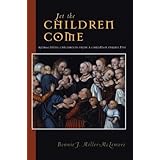
Bonnie J. Miller-McLemore explores childhood from a Christian perspective. She seeks the historical, theological perspectives of children in Christianity. The writing is simple and easy to understand. She does not write in deep theological terms that would be difficult for readers.
I did find much that what she said to be thought provoking. As one who works in children's ministry and blogs about children's spirituality, I was intrigued by much that she wrote. Throughout the text she offers some great questions to help adults think deeper about children and their spirituality.
She writes compassionately from a feministy theology perspective which influences her thoughts toward children as oppressed and forgotten in the church throughout history. This is a helpful reminder to us today. Most theological research has been done by men which has skewed their perspective on women. A woman who writes from her own perspective of a month is helpful for readers. She finishes her text with a series of questions for adults and parents to consider concerning the faith of their children. These are very helpful for all to explore deeper their children's faith and spiritual development.

Click Here to see more reviews about: Let the Children Come: Reimagining Childhood from a Christian Perspective (Families and Faith Series)

In this important and much-needed book, theologian, author, and teacher Bonnie J. Miller-McLemore writes about the struggle to raise children with integrity and faithfulness as Christians in a complex postmodern society. Let the Children Come shows that the care of children is in itself a religious discipline and a communal practice that places demands on both congregations and society as a whole. The author calls for clearer and more defined ways in which Christians can respond to the call to nurture all children (not just their own) as manifestations of God's presence in the world. Miller-McLemore raises and investigates questions that up until now have largely been left unasked, such as: What are the dominant cultural perceptions of children— including religious perceptions— with which parents must grapple? How have Christians defined children and parenting, and how should they today?

Buy Now

Click here for more information about Let the Children Come: Reimagining Childhood from a Christian Perspective (Families and Faith Series)

Read More...

The Unexpected Journey: Conversations with People Who Turned from Other Beliefs to Jesus Review

The Unexpected Journey: Conversations with People Who Turned from Other Beliefs to Jesus
Average Reviews:

(More customer reviews)
The evangelistic efforts of Christians today are crippled because of a fear of failure, or rejection, or incompetence. Consequently, rather than struggle with weak unclear efforts, often, there is none.
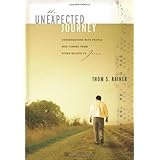
Thom S. Rainer's book "The Unexpected Journey: Conversations with People Who Turned from Other Beliefs to Jesus" serves to rebuild the confidence of would be evangelists. Rainer accidentally (?) reminds the reader that God still uses ordinary means to get the attention of sinners who need a relationship with Christ. Evangelistic programs, special outreaches, and orchestrated church campaigns are not the engines driving the unconverted to seek Christ.
So what is? Thom uses his classic Rainer analysis to tell a dozen stories of conversions to Christ. The book encourages readers to stay in the lives of others and share the love of Christ. No special program, no magic words, just faithful learning, living, and sharing the love of God reaches those who do not know him.


Click Here to see more reviews about: The Unexpected Journey: Conversations with People Who Turned from Other Beliefs to Jesus


Buy NowGet 32% OFF

Click here for more information about The Unexpected Journey: Conversations with People Who Turned from Other Beliefs to Jesus

Read More...

Deliver Us From Evil Review

Deliver Us From Evil
Average Reviews:

(More customer reviews)
In this thought-provoking book, author and Christian apologist Ravi Zacharias looks at the culture of the modern West, and sees it locked in a crisis that is already producing evil before our eyes. The first part of the book looks at the rise of three interlocking principles: 1) militant secularism, 2) moral relativism-based multiculturalism, and 3) the privatization of religion (demanding a separation of religion from public life). With piercing analysis, Dr. Zacharias examines the heart of the West's problems (mainly the United State's problems), how we got to where we are, and what it means.
This book is definitely one to give you much food for thought. Indeed, some of his statements seem prescient in light of the recent flaps over gay marriage and the Passion movie. I would recommend that all Christians read this book. By the way, when you finish the last chapter of the book, keep reading, the two appendices on the Bible and truth are fascinating and should not be skipped.

Click Here to see more reviews about: Deliver Us From Evil


In this compelling volume, Ravi Zacharias examines the mystery of evil. This brilliant writer and gifted teacher traces how secularization has led to a loss of shame, pluralization has led to a loss of reason, and privatization has led to a loss of meaning.


Buy NowGet 21% OFF

Click here for more information about Deliver Us From Evil

Read More...

Commentary on the New Testament Use of the Old Testament Review

Commentary on the New Testament Use of the Old Testament
Average Reviews:

(More customer reviews)
`Commentary on the New Testament Use of the Old Testament', edited by G. K. Beale and D. A. Carson supports the idea that given any approach to the examination of the New Testament you may think of, someone has written a book about it. And a superb book it is, if you have need for an examination of this subject from almost every angle. I say almost, because there is actually one thing I would like to have seen in this book, and it is not there. More on this anon.
For the lay reader, be aware that this is a scholarly book, with all the Greek, Hebrew, Aramaic, and (I suspect) even Coptic terms used freely, just when I've gotten in the habit of tracking down Greek, I have to deal with two even more difficult languages. I mention that primarily for those who are allergic to footnotes and phrases in languages other than English. Otherwise, I am delighted in how easy the reading is in all the contributions from eighteen (18) major scholars on the New Testament.
Much of this is attributable to the marching orders given to the writers by the two editors. This list of guidelines makes the diverse contributions very uniform, which contributes to the value of this book as the guide to a specialized type of Bible study based on this book's subject.
Anyone who has tracked down more than a handful of OT passages used in the NT will realize that the NT writers often take some liberties with their interpretations, reading in a prophesy about Jesus which, in the original text actually referred to something completely different. And, one has also run across a wide range of different ways in which OT texts are used, from `exact' quotes to paraphrases to allusions.
The editors address this range by asking all authors to address their OT citations from at least five different points of view. These are:
1.What is the NT context of the citation? What is the genre and literary structure of the book or chapter?
2.What is the OT context of the citation? Do these Markan citations come directly from Exodus, for example, or are they quoted from Isaiah's use of Exodus verses?
3.How was the OT quote handled or interpreted by Second Temple Judaism, or early Judaism in general?
4.From what text is the OT quotation copied. The Septuagint (LXX), the Masoretic text, or a Targum (scripture translated into Aramaic or Coptic).
5.What is the ultimate use or connection being made by the NT author's use of the OT. Is it simply to emote a connection, is it a use of a common OT idiom, is it a parable use, shorthand to evoking an OT story, or is there a belief that events in NT times fulfill a specific OT prophecy.
Of course, many commentaries on individual NT books do this as well, but most do not go into detail on points 2, 3, and 4.
In looking at those parts of the NT I know best, I find this book delivers everything it promises on these five points, but that the book cannot replace good commentaries and study Bibles for NT books. In looking at one of the most famous uses of OT scripture in Luke, at 4:18 - 19, where Jesus teaches from Isaiah 61:1 - 2, the authors, David Pao and Eckhard Schnabel cover all the editors' points admirably, including references to important opinions by famous scholars such as Rudolph Bultmann. For this passage and for all others in this chapter on Luke, the actual passage is NOT presented in any translation. Therefore, one has to have a copy of the Bible open to the passage, as you read the authors' interpretation of it. Less important is the fact that the explanation of this section of Luke on Jesus' teaching in the Nazareth synagogue says nothing about the puzzling climax, where the congregation turns on Jesus. But that is a logical limitation of the approach, and is not relevant to the subject of the book.
The introduction to Lucan passages was illuminating, as it tells us that even though one of Luke's primary objectives was to show the resolution of OT prophesies, Luke actually uses fewer OT quotes than Matthew. This is rarely discussed in commentaries on Luke.
So, especially with regard to the synoptic Gospels, this would be an excellent book to use as a guide to OT references in the NT. For the scholar, there is the usual tower of bibliographical references after each article, plus the usual index to Biblical citations at the back of the book. There was just one thing I wanted which is missing. This is a `reverse' index, if you will, of OT books, with the number and locations of where verses are cited in the NT. The reason for wishing such an index is as a guide to selecting which OT books may best be studied together, as with Luke and Deuteronomy (some commentators claim the 10 chapter journey of Jesus to Jerusalem is patterned after Deuteronomy).
Ultimately, this is a great reference if you make a habit of studying NT scriptures in depth, as either a pastor or bible study teacher.


Click Here to see more reviews about: Commentary on the New Testament Use of the Old Testament

Readers of the New Testament often encounter quotes or allusions to Old Testament stories and prophecies that are unfamiliar or obscure. In order to fully understand the teachings of Jesus and his followers, it is important to understand the large body of Scripture that preceded and informed their thinking. Leading evangelical scholars G. K. Beale and D. A. Carson have brought together a distinguished team to provide readers with a comprehensive commentary on Old Testament quotations, allusions, and echoes that appear from Matthew through Revelation. College and seminary students, pastors, scholars, and interested lay readers will want to add this unique commentary to their reference libraries. ContributorsCraig L. Blomberg (Denver Seminary) on MatthewRikk E. Watts (Regent College) on MarkDavid W. Pao (Trinity Evangelical Divinity School) and Eckhard J. Schnabel (Trinity Evangelical Divinity School) on LukeAndreas J. Köstenberger (Southeastern Baptist Theological Seminary) on John I. Howard Marshall (University of Aberdeen) on ActsMark A. Seifrid (Southern Baptist Theological Seminary) on Romans Roy E. Ciampa (Gordon-Conwell Theological Seminary) and Brian S. Rosner (Moore Theological College) on 1 CorinthiansPeter Balla (Károli Gáspár Reformed University, Budapest) on 2 Corinthians Moisés Silva (author of Philippians in the Baker Exegetical Commentary on the New Testament) on Galatians and Philippians Frank S. Thielman (Beeson Divinity School) on Ephesians G. K. Beale (Wheaton College Graduate School) on ColossiansJeffrey A. D. Weima (Calvin Theological Seminary) on 1 and 2 Thessalonians Philip H. Towner (United Bible Societies) on 1 and 2 Timothy and Titus George H. Guthrie (Union University) on Hebrews D. A. Carson (Trinity Evangelical Divinity School) on the General Epistles G. K. Beale (Wheaton College Graduate School) and Sean M. McDonough (Gordon-Conwell Theological Seminary) on Revelation

Buy NowGet 38% OFF

Click here for more information about Commentary on the New Testament Use of the Old Testament

Read More...

They Like Jesus but Not the Church: Insights from Emerging Generations Review

They Like Jesus but Not the Church: Insights from Emerging Generations
Average Reviews:

(More customer reviews)
Everyone who takes the Christian faith seriously should read this book and be prepared to do some sober reflection. Whether a pastor, youth worker, elder, deacon, lay leader, or church member - those who take Dan Kimball's book to heart may very well need to make some significant changes in their approach to outreach and evangelism.
In They Like Jesus But Not The Church, Dan Kimball first points out the convicting and humbling truth that the longer one is a Christian, the less likely one is to have significant friendships with those who are not Christian. Instead, most Christians today find their lives consumed with church-related activities - and those whose primary jobs are ministry-related are often the worst offenders. How can anyone know what the needs of the unchurched are unless they are involved in trusting relationships with them?
The church in America has become nearly irrelevant to most 20- and 30-somethings. Yet those who follow Jesus rarely venture outside our cozy Christian comfort zones to learn why. Unless individual Christians are actively engaged in open and trusting relationships with non-Christians (without a conversion agenda), the life-changing gospel message won't effectively be spread merely by changing our worship service structure, format, or atmosphere. Furthermore, most Christians tend to compound the problem by generally taking one of two approaches to evangelism: either we see every non-Christian as a potential target, and if we spend any time with them at all the goal is to "seal the deal;" or we isolate our faith from our everyday lives and generally avoid faith- or church-related conversations with anyone other than our church friends.
One of the biggest strengths of this book are the voices of many people (most in their 20s and 30s) with whom Dan Kimball has spent hours in conversation. He has developed trusting relationships and most importantly has really listened to where they're coming from when they talk about Jesus, the church, and Christians. Dan's goal was not to convert them, but to hear them. And likely, in doing so, he began to remove some of the stereotypes about Christians and the church that they might have held.
It is surprising and refreshing to learn of the positive and often even accurate views many people outside the church have about Jesus. In general, they deeply respect him and his teachings. But they see the church as very un-Christlike, and the church must not ignore their perceptions and feelings. Whether or not their ideas about the church being homophobic, male-dominated, judgmental and negative, or having a political agenda are true of all churches or any single church, the reality is that these perceptions are a significant barrier to trust in the church and acceptance of Christianity.
Dan does not compromise his orthodox beliefs as he interacts and engages with the people and the issues, and neither does he advocate that any church or individual compromise. But he is willing to ask difficult questions - questions that any serious Christian should consider. At the end of each chapter are excellent discussion questions which challenge and provoke thought about specific issues, about the reader's own attitudes and perceptions, and about ways the reader might take action.
This book has deeply challenged me, and I highly recommend it to anyone who is serious about our great commission to make disciples out of all nations. They Like Jesus But Not The Church is a reminder to me that God is indeed working in the world, and that I am called to be in relationship with people at all points in their journey of faith, doing what I can to help point the way to Jesus, yet trusting that each person is ultimately in God's hands.


Click Here to see more reviews about: They Like Jesus but Not the Church: Insights from Emerging Generations


Buy NowGet 33% OFF

Click here for more information about They Like Jesus but Not the Church: Insights from Emerging Generations

Read More...

Saving Jesus from the Church: How to Stop Worshiping Christ and Start Following Jesus Review

Saving Jesus from the Church: How to Stop Worshiping Christ and Start Following Jesus
Average Reviews:

(More customer reviews)
Does it matter if Jesus was born to a virgin or not? Does it matter if Jesus was born in a manger or a field, to a virgin or a wife with several children? Does it change anything if Jesus wasn't really, physically raised from the dead? Is He somehow less influential, less important, less moral? Are His words or His actions any less significant or inspirational if he had a girlfriend or a companion? Then why, Meyers asks, is that all we talk about anymore?
The title and its accompanying cover say much of what needs to be said about the new book from Oklahoma City resident, author, professor, scholar, syndicated columnist, and controversial reverend Robin Meyers. The bluest man in the reddest state has put his new book to the masses for what he hopes will be a uniting, not dividing, result. With such a title, you'd think it a stretch, but Meyers' approach and respect for the subject is convincing for anyone who makes it past the Prologue.
This book attempts to dissect, as the previous sentence begins to describe, the human side of Jesus and the deity which was created in his remembrance. Jesus the human was about peace, unconditional love, inclusiveness, aiding the sick and the poor, forgiving, and fellowship. The deity, on the other hand, is much more about commandments and rules, practices and rituals, do's and don'ts. Dr. Meyers points out that merely believing in Jesus has no impact on our daily lives. Following Jesus, though, can change everything.
Dr. Meyers seeks to find the common ground in all the divisiveness and debate about religion. Meyers has said of his own book that he hopes Christians, Jews, Muslims, Atheists, and Agnostics alike can see that when we remove that which we disagree - and there are many things about which we disagree - we can all see that following the teachings of a human being like Jesus will be the more productive task to merely consenting to belief in a deity like Christ.
Meyers' central purpose for the book? Finding a reason for the millions of Americans who have left the church in disappointment, confusion or betrayal to come back and try a new approach to faith: Following what Jesus represents, not just believing in His story.
While political in the Prologue (Meyers gives an account of a dream in which he found himself isolated from the modern stereotypes of Christianity and its alignment with Conservative politics, war, and greed), Meyers soon defects from his personal motives and finds a near-objective position from which he frames the rest of his book. Thoughtful and patient, Dr. Meyers teaches and guides at a pace that is tolerable for religious scholars and more than accommodating for the casual reader.
In his least political and most thoughtful book to date, Dr. Robin Meyers finds the common ground in the world of Jesus and lays out a call to action that unites us under a banner of hope and reconciliation.

Click Here to see more reviews about: Saving Jesus from the Church: How to Stop Worshiping Christ and Start Following Jesus


From One of America's Leading Pastors, a Bold Call to Restore Christianity's True Mission: Following Jesus

The marriage of bad theology and hypocritical behavior by the church has eroded our spiritual lives. Taking the best of biblical scholarship, Meyers recasts core Christian concepts in an effort to save Christianity from its obsession with personal salvation. Not a plea to try something brand new, but rather the recovery of something very old, Saving Jesus from the Church shows us what it means to follow Jesus's teachings today.


Buy NowGet 32% OFF

Click here for more information about Saving Jesus from the Church: How to Stop Worshiping Christ and Start Following Jesus

Read More...