Showing posts with label american history. Show all posts

No Promises in the Wind Review

No Promises in the Wind
Average Reviews:

(More customer reviews)
The book No Promises in the Wind by Irene hunt was about a young boy's struggle to survive during the depression in the U.S. It takes place during the winter of 1932. Josh is the main character in the book. He and his father Stefan always get into arguments because his father has no job and can't provide for his family, so his father takes his frustration out on his on Josh, his oldest son. This causes Josh to leave home and embark on his adventure. His mother Mary is the one that gives Josh the OK to leave home. She feels bad for doing this, but she only sees the situation getting worse. So, Howie and Josh decide to run away together and make a life for themselves. Howie is Josh's best friend. Just before they leave, Josh's little brother wants come along. His name is Joey. Joey is ten years old and looks like an angel. There many problems that the main characters encounter during the book, the first one happens when the brothers lose their friend. Howie is run over by a train in the beginning of the book. After this, the main problem is to get money and food. Different people help Josh and Joey get food. One day while walking, they meet a truck driver named Lonnie. Lonnie is very helpful; he gives the boys meals and a long ride down south to warmer weather. He also helps Josh find a job at a carnival. At the carnival Josh and Joey meet Emily. She is an older lady. She is very kind to the boys. Josh falls in love with her, but it does not work out because of the age differences. The carnival burns down so the boys head back north to find their friend Lonnie. Along the way they have to beg to survive.
The one character that I could relate to was Josh. Because I have had similar conflicts with my father. Like Josh's father, my dad was going through hard times and most of the time took out his frustration on me. At times I wanted to leave, but I did not. My father and I worked out our problems like Josh and his father did.
I really enjoyed this book. It keeps the reader entertained the whole time. You always want to find out what is going to happen to the boys all the way to the end. My favorite part is when the boys are at the carnival. The author does a good job of describing the people and events that happen during their stay at the carnival. My least favorite part was when the man at the shoe store took the boy's money. Personally I would not change anything to this book. I think it was written well, and it gets its point across.
I would recommend this book to any one who is interested in how life was during the 1930s. Also anyone that grew up during that time period might enjoy it. This book is a fun read that keeps you entertained the whole time.

Click Here to see more reviews about: No Promises in the Wind

In 1932, America was in the depths of a deep depression. A job, food to fill you, a place to sleep, and shoes without holes--for millions of people, these simple needs were nothing more than dreams. At 15 years of age, Josh had to make his own way through a country of angry, frightened people. This is the story of a young man's struggle to find a life for himself in the turbulent 1930s.

Buy Now

Click here for more information about No Promises in the Wind

Read More...

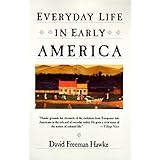
Everyday Life in Early America Review

Everyday Life in Early America
Average Reviews:

(More customer reviews)
The only genuine problem with this excellent book is that it does not compare favorably with some of the other books in this series. For instance, if one turns to this after reading Schlereth's amazing VICTORIAN AMERICA, one is scaled down the book seems in comparison. This is not the fault of author David Hawke. The problem is the paucity of details in everyday life in 17th century America compared to the late 19th. Unfortunately for Hawke, the life of Americans in the 17th century was rudimentary and, of necessity, simple. What makes VICTORIAN AMERICA such a delight is the almost overwhelmingly amount of delicious detail.
Nonetheless, life in 17th century colonial America is apt to be less familiar to most readers than that of late 19th century America, and this book performs an enormous service in providing a concise, well-written overview of what that life was like. Hawke is especially good at exploding various myths that have evolved over the years concerning colonial life. Unlike the later volumes in the series, Hawke deals, by dint of necessity, of the larger historical situation.
Some of the topics that Hawke takes up include the structure of towns and villages, the nature of farms and the crops grown, houses and the types of objects found within them, the health of the settlers and treatment of illness, social stratification, indentured servitude and slavery, relations with Native Americans, and various superstitions. If the book was somewhat less exhilarating than some of the later books in the series, it nonetheless is quite informative. I highly recommend it to anyone wishing to learn more about the nuts and bolts of colonial life.

Click Here to see more reviews about: Everyday Life in Early America

"In this clearly written volume, Hawke provides enlightening and colorful descriptions of early Colonial Americans and debunks many widely held assumptions about 17th century settlers."--Publishers Weekly

Buy NowGet 33% OFF

Click here for more information about Everyday Life in Early America

Read More...

To Hell and Back Review

To Hell and Back
Average Reviews:

(More customer reviews)
It was interesting to read this account of Audie Murphy's travails in World War II (Murphy was one of the most highly decorated soldiers of that war) having read Ambrose's eulogy Band of Brothers .
Murphy received (every major medal, some more than once, that the army has to offer). He joined the army at age 17 to support six siblings after his mother died (his father had left the family earlier), and he doesn't talk about how the war haunted the rest of his life.
He portrays a brutal, harsh struggle to survive, where the only thing that matters is keeping oneself and one's friends alive. There are moments of great poignancy, others of humor. Once, hungry, dirty and wet, mired in their foxholes, they notice they are under a tree with ripe cherries. Not daring to stick a head up, let alone climb out of the foxhole, Murphy's buddy gets the idea of shooting down the branches with his machine gun, and soon they are delighted to have cherry branches falling on them, making the day just a little brighter.
Not once does Murphy mention his numerous awards, Clearly, Murphy believed that luck played as much a part in his survival as anything he did. He was however, the kind of person who tried to control his destiny, doing what was necessary and taking the initiative in order to get through the day. A little piece of Murphy died every time a friend was killed, and soon almost all of his friends were gone. He was delighted if they received a wound that would return them to the rear, away from battle. He sympathized and worried for the lieutenant who had been badly injured and returned voluntarily to the front only to lose his nerve under the intense shelling. It must have been horribly traumatic to develop such close bonds and to have them ripped apart.
At the risk of sounding a little chauvinistic, I quote from the last lines of his book:
" When I was a child, I was told that men were branded by war. Has the brand been put on me? Have the years of blood and ruin stripped me of all decency? Of all belief? Not of all belief. I believe in the force of a hand grenade, the power of artillery, the accuracy of a Garand. I believe in hitting before you get hit, and that dead men do not look noble.
"But I also believe in men like Brandon and Novak and Swope and Kerrigan; and all the men who stood up against the enemy, taking their beatings without whimper and their triumphs without boasting. The men who went and would go again to hell and back to preserve what our country thinks right and decent.
"My country. America! That is it. We have been so intent on death that we have forgotten life. And now suddenly life faces us. I swear to myself that I will measure up to it. I may be branded by war, but I will not be defeated by it.
"Gradually it becomes clear. I will go back. I will find the kind of girl of whom I once dreamed. I will learn to look at life through uncynical eyes, to have faith, to know love. I will learn to work in peace as in war. And finally - finally, like countless others, I will learn to live again."

Click Here to see more reviews about: To Hell and Back

The classic bestselling war memoir by the most decorated American soldier in World War II, back in print in a trade paperbackOriginally published in 1949, To Hell and Back was a smash bestseller for fourteen weeks and later became a major motion picture starring Audie Murphy as himself. More than fifty years later, this classic wartime memoir is just as gripping as it was then. Desperate to see action but rejected by both the marines and paratroopers because he was too short, Murphy eventually found a home with the infantry. He fought through campaigns in Sicily, Italy, France, and Germany. Although still under twenty-one years old on V-E Day, he was credited with having killed, captured, or wounded 240 Germans. He emerged from the war as America's most decorated soldier, having received twenty-one medals, including our highest military decoration, the Congressional Medal of Honor. To Hell and Back is a powerfully real portrayal of American GI's at war.

Buy NowGet 32% OFF

Click here for more information about To Hell and Back

Read More...

New England Primer Review

New England Primer
Average Reviews:

(More customer reviews)
David Barton has done this country a great service by reprinting the 1777 A.D. edition of this beginners' textbook that was used by American students up until the early 1900's. This was the beginning textbook for students in all types of American schools: public, private, semiprivate, home, dame, parochial, etc. The foreward states:
"The New England Primer was one of the greatest books ever published. It went through innumerable editions; it reflected in a marvelous way the spirit of the age that produced it, and contributed, perhaps more than any other book except the Bible, to the molding of those sturdy generations that gave to America its liberty and its institutions."
The Founding Fathers of this country and other Americans learned to read from this little treasure. There is much that we can learn about them and the way they thought by examining its contents. The true study of history should incorporate the study of what motivated people to do the things they did. This reprint makes for great classroom discussion. It makes for an excellent addition to any American History class at all grade levels and all ages. It is pocket-size, and kids and adults love it. I highly recommend it!

Click Here to see more reviews about: New England Primer


Buy Now

Click here for more information about New England Primer

Read More...

The Forgotten Man: A New History of the Great Depression Review

The Forgotten Man: A New History of the Great Depression
Average Reviews:

(More customer reviews)
The Forgotten Man (TFM for short) is not a polemic. It is not an argument for a particular theory or economic interpretation of the Depression. Instead, the author steps back and lets the story tell itself. She has sifted through memoirs and contemporaneous accounts in order to carry the reader back into the mindset of the 1930's. She focuses on a diverse selection of protagonists from that period, including opponents of Roosevelt like Andrew Mellon and Wendell Wilkie as well as members of Roosevelt's "brain trust" like Paul Douglas and Rexford Tugwell. Note that in the context of that time, "trust" meant the same thing as cartel (as in anti-trust laws). Roosevelt was claiming that with his advisers he had cornered the market on brains. If so, then after reading TFM, my sense is that there was not much value in this particular monopoly.I came away with three major conclusions.1. For better or worse, much of the country saw the Depression as something akin to a natural disaster, and people accordingly lowered their expectations for their standard of living.2. Economic ignorance among policymakers was much worse than I had realized. I was steeped in the myth that the reason the Depression was so bad was that only Keynes had the answer, and he had to overcome the resistance of "the classical economists," such as Irving Fisher. But the differences between Fisher and Keynes seem small when compared to the differences between the policymakers and both economists. In physics, it would be like watching an academic debate over the meaning of quantum mechanics while policymakers are unable to grasp the simple concept of gravity.3. The struggle over economic policy in the 1930's was really an episode in the long, historical conflict between business participants in the market and anti-business academics. Roosevelt gave free rein to the professors, until the start of the Second World War led him to realize that he would need the tycoons to help mobilize to defeat Hitler. I suspect that one reason that Roosevelt and the New Deal come off so well in the conventional wisdom is that history books are written by professors, not by entrepreneurs.I should stress that these are my own views, and that TFM is much less prone to making generalizations and drawing conclusions. Readers with a variety of backgrounds and predispositions can appreciate the book and learn their own lessons.

Click Here to see more reviews about: The Forgotten Man: A New History of the Great Depression


Buy NowGet 33% OFF

Click here for more information about The Forgotten Man: A New History of the Great Depression

Read More...

Pragmatism Review

Pragmatism
Average Reviews:

(More customer reviews)
One is surprised to read in the first two reviews that James's pragmatism is a justification for relativism, nihilism, and even despotic tyranny. This evaluation comes from interpreting James in terms of utilitarianism, rather than understanding what he means by practical consequences. One will hear James claim in _Pragmatism_ that, "I am accustomed to put questions to my classes in this way: In what respects would the world be different if this alternative or that were true? If I can find nothing that would become different, then the alternative has no sense." The pragmatic maxim does not invite us to accept the most expedient point of view for the purpose of utility, but instead invites us to return to the world and experience in evaluating the nature of concepts. Thus, to adopt an example from Peirce, an application of the pragmatic maxim to a concept such as "salt" would lead us to look at the practical consequences of this concept for real world experience such as its hardness, seasoning capabilities, chemical nature, ability to combine with other elements, etc.. In other words, pragmatism, as James agrees, is also an empiricism. Given this, an application of the pragmatic maxim to the political concepts of democracy and fascism would indeed lead us to discern vast differences between the two doctrines and to ultimately reject the former by virtue of its practical consequences. In final analysis, _Pragmatism_ is a curative of philosophical abstractions which would ask us to turn away from empty first principles to see what difference those principles actually make in our actions and lives. Such an approach to philosophy would surely have the effect of clearing away much useless debate and of broadening our appreciation of difference and inquiry. As James says later in the book, "There can be no difference anywhere that doesn't make a difference elsewhere-- no difference in abstract truth that doesn't express itself in a difference in concrete fact and conduct consequent upon that fact, imposed on somebody, somehow, somewhere and somewhen. The whole function of philosophy ought to be to find out what definite difference it will make to you and me, at definite instants of our life, if this world-formula or that world-formula be the true one." Such a philosophy is truly timely in our increasingly multicultural age. The operative principle of pragmatism is not utilitarianism which can often be cold, cruel and heartless, but rather verification that demands of us that we return to experience to determine the difference that a conceptual difference makes. This book is an absolute must read for anyone interested in overcoming the abstractness of empty transcendental philosophies and who wish to see philosophy in its throbbing relavance for the life of action, ethics, and politics. In this respect, James stands shoulder to shoulder with the uncompromising and liberating philosophies of figures like Spinoza, Nietzsche, Bergson, Dewey, and Peirce.

Click Here to see more reviews about: Pragmatism

This anthology is a thorough introduction to classic literature for those who have not yet experienced these literary masterworks. For those who have known and loved these works in the past, this is an invitation to reunite with old friends in a fresh new format.From Shakespeare's finesse to Oscar Wilde's wit, this unique collection brings together works as diverse and influential as The Pilgrim's Progress and Othello. As an anthology that invites readers to immerse themselves in the masterpieces of the literary giants, it is must-have addition to any library

Buy Now

Click here for more information about Pragmatism

Read More...

The Radicalism of the American Revolution Review

The Radicalism of the American Revolution
Average Reviews:

(More customer reviews)
I first read the work of Gordon Wood in graduate school a quarter century ago, especially his magnificent and massive 1972 book, "The Creation of the American Republic, 1776-1787." This study, "The Radicalism of the American Revolution," is essentially a continuation of that earlier work, probing the intellectual underpinnings of the era. It, too, is a magnificent work and fully deserving of the Pulitzer Prize that it received. While covering some of the same ground as Bernard Bailyn's "The Ideological Origins of the American Revolution" (Harvard University Press, 1967), this book develops a more detailed, rigorous, and compelling portrait of a society transforming itself from one of feudal relationships to one predicated on republicanism, democracy, and market-driven capitalism.
At a fundamental level, Wood argues, the American Revolution was truly a radical episode in world history. He comments that "The republican revolution was the greatest utopian movement in American history. The revolutionaries aimed at nothing less than a reconstitution of American society. They hoped to destroy the bonds holding together the older monarchical society--kinship, patriarchy, and patronage--and to put in their place new social bonds of love, respect, and consent. They sought to construct a society and governments based on virtue and disinterested public leadership and to set in motion a moral government that would eventually be felt around the globe" (p. 229). They advocated ensuring equality as the first task of society; Wood calls this "the single most powerful and radical ideological force in all of American history" (p. 234). And all Americans, he argues, embraced the idea of equality as manifested in labor and accomplishment. He notes, "Perhaps nothing separated early-nineteenth-century Americans more from Europeans than their attitude toward labor and their egalitarian sense that everyone must participate in it" (p. 286).
Wood closes "The Radicalism of the American Revolution" with this, "No doubt the cost that America paid for this democracy was high--with its vulgarity, its materialism, its rootlessness, its anti-intellectualism. But there is no denying the wonder of it and the real earthly benefits it brought to the hitherto neglected and despised masses of common laboring people. The American Revolution created this democracy, and we are living with its consequences still" (p. 269).
Above all, Wood argues that ideas and ideological issues matter in the context of American history. Self-interest is very real, but ideas and ideals serve as powerful motivations for actions. This is a stunningly significant book that must be read by all who seek to understand the origins of the United States.

Click Here to see more reviews about: The Radicalism of the American Revolution


Buy NowGet 38% OFF

Click here for more information about The Radicalism of the American Revolution

Read More...

Paul Revere's Ride Review

Paul Revere's Ride
Average Reviews:

(More customer reviews)
David Hackett Fisher's Paul Revere's Ride ("PRR") is a wonderful work of narrative history, with some splendid historiography tacked on at the end. Paul Revere's role in the events of April 18-19, 1775, has been contested by various critics. Descendants and partisans of William Dawes have claimed that his role was far more significant. Post-modernists have deconstructed Rever's ride as an exercise in national myth-making.
Fisher puts Revere back in the center of the events of April 1775. Of course, PRR is more than just an account of the ride. Fisher gives us a blend of biography and history--he opens with a short account of Revere's youth and then situates Revere in the Boston Whig movement that gave rise to the Revolution. The ride is then put into the context of the origins of the British expedition and the battle of Lexington and Concord.
One of the things I like best about PRR is Fisher's even-handness and basic fairness. Revere takes center stage, but Fisher does not overstate the case--he acknowledges that others played important roles (notably Dawes). Even as to Revere's silversmithing, Fisher acknowledges that Revere's work was not always perfect. General Gage and the other British protagonists are given fair--even sympathetic--treatment.
One particularly interesting contribution made by PRR is Fisher's treatment of the Lexington-Concord battle as a public relations issue. He explains how news spread through the colonies, how Congress got their version of events to London before Gage, how that account affected British public opinion. Given how important public opinion was in the course of the war, this is a very valuable treatment.
Lastly, but maybe not least, the book is superbly illustrated.
In sum, very highly recommended.

Click Here to see more reviews about: Paul Revere's Ride


Buy NowGet 44% OFF

Click here for more information about Paul Revere's Ride

Read More...

Life Is So Good: One Man's Extraordinary Journey through the 20th Century and How he Learned to Read at Age 98 Review

Life Is So Good: One Man's Extraordinary Journey through the 20th Century and How he Learned to Read at Age 98
Average Reviews:

(More customer reviews)
I originally bought 2 copies and am now ordering 9 more copies. There is so much wisdom in this book. It is a primer on life. It goes beyond "Tuesdays with Morrie". George Dawson is so positive and upbeat. I agree with the previous reviewer that this should be mandatory reading in schools, but I would lower the grades to Junior High School and maybe even 5th and 6th graders. George gives us a black man's perspective of life in the South in the first half of the 1900's. He also gives us an excellent work ethic and model for living. White and black children alike would benefit from the historical perspective. We all can benefit from his little philosophical statements here and there. I had lots of smiles while reading this, plus many tears. I remember the South (I'm white) when bathrooms, drinking fountains and restaurants were segregated. I was a child from California, to whom this was foreign. George brings these memories back, but in a non-judgemental way. He experienced the introduction of cars and airplanes, as well as the tragedy at Columbine High School. Through out, he has respect for others and a tolerance for differing perspectives. Buy this book. Read it, and then pass it on. Share it with your children. Discuss the contents. George Dawson has truly given us all a remarkable gift.

Click Here to see more reviews about: Life Is So Good: One Man's Extraordinary Journey through the 20th Century and How he Learned to Read at Age 98


Buy NowGet 43% OFF

Click here for more information about Life Is So Good: One Man's Extraordinary Journey through the 20th Century and How he Learned to Read at Age 98

Read More...

The Echo of Greece Review

The Echo of Greece
Average Reviews:

(More customer reviews)
Edith Hamilton did it again with the Echo of Greece. This book looks at and explains, in a colloquial manner, the rise, apex, and decline of Greece during their golden age (from the beginning of the 5th century B.C. to the end of the 4th century B.C.). After finishing this book, the reader comes away not only with a better understanding of the Greek ethos, but also with an explanation of why things happened the way that they did. It is the latter accomplishment, I think, that readers will most appreciate.
Hamilton's book is divided into 10 chapters: I. Freedom, II. Athens' Failure, III. The School of Athens, IV. The School Teachers, V. Demosthenes, VI. Alexander the Great, VII. Menander, VIII. The Stoics, IX. Plutarch, and X. The Greek Way and the Roman Way.
The organization is brilliant, and leads the reader by their hand through the intellectual and artistic accomplishments of Greece not only during her height, but as you can see from chapters VI.-X., examines her influece on the world she helped create.
There are, however, a couple of frustrating parts about Hamilton's book as well. She provides excellent quotes throughout, but never explains where the reader can find them. A typical example appears on page 157, where she states that Aristotle said "The true nature of anything is what it becomes at its highest." But in which of Aristotle's myriad books should the reader begin to look to find this quote? Sometimes, even worse, Hamilton will just say "And a Stoic said that ..." Which Stoic?
A second complaint I have is that Hamilton spends a good deal of time talking about Greece's political, philosophical, and artistic achievements, but never really delves into Greece's artistic accomplishments. If she would have done so, it would have greatly improved an already great book.
But in comparison to the strengths of this book, these complaints are minor. Overall, I highly recommend this book both to the novice and expert alike. I couldn't put it down.

Click Here to see more reviews about: The Echo of Greece


Fourth-century Athens has a special claim on our attention, apart from the great men it produced, for it is the prelude to the end of Greece.
The kind of events that took place in the great free government of the ancient world may, by reason of unchanging human nature, be repeated in the modern world. The course that Athens followedcan be to us not only a record of distant and forgotten events, but a blueprint of what may happen again.

Buy NowGet 27% OFF

Click here for more information about The Echo of Greece

Read More...

Deliver Us from Evil: Defeating Terrorism, Despotism, and Liberalism Review

Deliver Us from Evil: Defeating Terrorism, Despotism, and Liberalism
Average Reviews:

(More customer reviews)
From the melodramatic title to the end, this book was a tough read. Sean's remarks are simplistic to the point of imbecility. (His logic is something akin to: all lemons are yellow; my car is yellow; my car must be a lemon.) He even repeats himself, and his references are shoddy.
This is the man who voiced opposition to President Clinton sending troops to Bosnia to eliminate the genocide and ethnic cleansing, which it did. Sean asserted that it was his patriotic duty to speak out as an American, and his exercise of free speech. He asked, how this president could justify his actions to American families when their relatives started coming home in body bags. When Bush invaded Iraq, patriotic duty and free speech went out the window when he asserted that criticism of the Bush administration was undermining our national resolve.
His real low point came when a renegade NYC Police Officer named Volpe sodomized Abner Luema (spelling?) with a broom handle in a police precinct. With nothing more than an intuition, Sean announced on the air that maybe that penetration came from the victim's lifestyle. Sean and Volpe's father shared microphones as they crooned a popular melody with made-up lyrics that implied the same. The crooning stopped suddenly when Volpe was fired from the force, and admitted to the sodomy.
Sean again showed his patriotism and wisdom in 1998 when President Clinton announced that a terrorist named Usama bin Laden and his al Qaeda group were the biggest threat to the US. Hannity joined the chorus of republican legislators who ignored the warning, accusing Clinton of "wagging the dog" in order to take focus from the Monica Lewinsky scandal.
Naturally, the bottom line is that all liberals are evil, and all conservatives are good. All liberals are blind, and conservatives are visionary.
There's just one question I have that Sean seemed to miss, and didn't address:
He claims:
Bill Clinton was responsible for 9/11.
President Bush was only in office eight months.
It wasn't enough time to prepare us against terrorist attack.
Okay.
The first bombing of the World Trade Center occurred six weeks after Bill Clinton came to office.
Does that mean that it was Clinton's predecessor, George Bush's father (41) who was responsible for the first bombing?
Finally, all his callers compliment him as a patriotic American, but what has this man done except talk? Like most chickenhawks, he's a great talker, but you have to walk the walk. I'm waiting for Sean to take his first step.

Click Here to see more reviews about: Deliver Us from Evil: Defeating Terrorism, Despotism, and Liberalism


Buy Now

Click here for more information about Deliver Us from Evil: Defeating Terrorism, Despotism, and Liberalism

Read More...

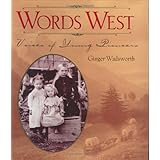
Words West: Voices of Young Pioneers Review

Words West: Voices of Young Pioneers
Average Reviews:

(More customer reviews)
Any researcher, any writer, any educator, any student, any person interested in the Oregon Trail has to read this book. It is full of letters, lists, journal entries that are not only informative and intersting but also entertaining.

Click Here to see more reviews about: Words West: Voices of Young Pioneers


Buy NowGet 25% OFF

Click here for more information about Words West: Voices of Young Pioneers

Read More...

The Imperfectionists: A Novel (Random House Reader's Circle) Review

The Imperfectionists: A Novel (Random House Reader's Circle)
Average Reviews:

(More customer reviews)
The Imperfectionists is flat-out one of the most enjoyable debut books I've read. This book has it all: writing that's so brilliant and astute that it's hard to believe this is Mr. Rachman's freshman effort, highly original and authentic characters, and a very timely theme: the demise of the printed newspaper.
The novel -- set in Rome -- is focused on the personal lives of various news reporters, executives, copy editors, and (in one case) a reader. Each chapter focuses on one individual and is a story all its own (think: Olive Kitteridge or In Other Rooms, Other Wonders); together, the whole is greater than the part of its sums and represents the trials, tribulations, and occasional rewards of those involved with an international English language newspaper.
All of these multi-faceted, interwoven stories sparkle in different ways. There is Lloyd, the down-on-his-luck Paris correspondent who is willing to play his own son for a byline. There's Arthur, the obituary writer and son of a famous journalist who sits on his laurels before his life is transformed by a heart-rendering tragedy. There's Abby -- aka Accounts Payable -- the financial officer who finds that one of her firings comes back to "bite" her in a most unexpected way. There's Herman, the overly hefty pussycat of a corrections editor with an 18,000-plus style guide he calls "The Bible"; woe is the unwitting writer who violates it! And Kathleen, the imperious and workaholic editor-in-chief who learns things about herself from a past lover that she would rather have not. And, in one of the most laugh-out-loud humorous of the stories, there's Winston, the naive Cairo stringer who is manipulated by his competitor Snyder, a middle-aged man with an over-the-top ego.
These and other "imperfect" characters come alive for the reader, often in unexpected ways. The situations portrayed are as real as life itself; it's obvious that Mr. Rachman cares about his characters and never sets them up as straw men to make a point or for comic relief. Between each chapter, the back-story of the newspaper is established, along with the everyday gripes of the employee -- a pitch-perfect backdrop for current events. The Imperfectionists is, in turn, poignant, strongly imagined, and endearing. I can't imagine it not being a winner.

Click Here to see more reviews about: The Imperfectionists: A Novel (Random House Reader's Circle)


Buy NowGet 40% OFF

Click here for more information about The Imperfectionists: A Novel (Random House Reader's Circle)

Read More...

The Fifth of March: A Story of the Boston Massacre (Great Episodes) Review

The Fifth of March: A Story of the Boston Massacre (Great Episodes)
Average Reviews:

(More customer reviews)
Read this, and you'll feel sooo smart...trust me! I was TEACHING MY HISTORY teacher about the Boston Massacre after I was done! This was my very first Rinaldi book, and for a while it was my favorite book in the world! This entriguing story got me hooked on reading. I got up to 10,000 pages in 4 months. Yep, it'll get you started! But anyways, Rachel Marsh is a humble nanny to the children of John and Abigail Adams. Everything in her life is comfortable...the home is nice, the children are wonderful, and she is treated by her emploers much better than a simple servant. Then, they come. One day, fleets of British troops invade Boston, and that's where Rachel meets and befriends Private Mathew Kilroy. After the Boston Massacre happens, Rachel must make a descision...break off her friendship with Mathew and remain with the Adams, or continue to be his friend and be fired! This story is so real, it almost depresses you in the sad parts. I really loved this book, and would HIGHLY RECCOMEND it to anyone!

Click Here to see more reviews about: The Fifth of March: A Story of the Boston Massacre (Great Episodes)


Buy Now

Click here for more information about The Fifth of March: A Story of the Boston Massacre (Great Episodes)

Read More...

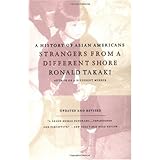
Strangers from a Different Shore: A History of Asian Americans, Updated and Revised Edition Review

Strangers from a Different Shore: A History of Asian Americans, Updated and Revised Edition
Average Reviews:

(More customer reviews)
Ronald Takaki did an excellent job in writing the Asian Americans experience from the first generation of immigrants to current issues that are affecting Asian Americans today. One of Takaki's aims in this book is to tell his readers the role of Asian-Americans in shaping the history of America. Many, he believes, held the view that being an American means being "white" which is far from the truth.
Takaki uses a variety of sources such as personal recollection, oral testimonies, newspapers, court cases, personal observations, among others. This makes his writings very credible indeed.
One of Takaki's aim is to bring a deeper understanding of Asian-Americans to his readers. Reading his book enables you to understand the Asian culture, their beliefs, ideas and why they become who they are today. Besides that, Takaki does not focus on only one ethnic group but several others that make up the so called "Asian American" minority group.
I recommend this book to anyone who wants to learn more about Asian Americans and the roles they played in shaping America today. It is important to learn about different ethnic group as the history of America is essentially a history of immigrants and it is important for us not to neglect this minority group which has made tremendous contributions to the nation and its society.

Click Here to see more reviews about: Strangers from a Different Shore: A History of Asian Americans, Updated and Revised Edition


Buy NowGet 32% OFF

Click here for more information about Strangers from a Different Shore: A History of Asian Americans, Updated and Revised Edition

Read More...

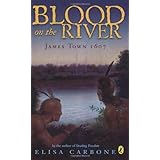
Blood on the River: James Town, 1607 Review

Blood on the River: James Town, 1607
Average Reviews:

(More customer reviews)
The importance and fun of historical fiction is the ability to "live" in another time and place and understand something about that point in history. As a librarian, I've purchased fiction and nonfiction books about Jamestown and I've provided educational videos on the topic. I have studied the settlement along with the kids through elementary, junior high and high school, blah-blah-blah.
I have just finished Elisa Carbone's superb Blood on the River.
NOW I get it.
Other books have accurately and factually recounted the history of the James Town settlement but Carbone has brought it to life. Using real characters from the colony's registers, she has recreated a story that is an absolute page turner. We smell the stench of the ships and see the frost on the ground. The distrust between the English and the Wampanoag is palpable. The gnawing hunger, the "summer sickness" and the scent of wood fires is so strong, I felt like I was within the palisade walls.
Young Samuel Collier is bound as a page to Captain John Smith on the eve of his departure for Virginia. Sam's fierce temper and survival sense will be his undoing and his salvation in the new land. The perils of the voyage at sea and the political turmoil that plagued the expedition from the onset are vividly described. The useless "gentlemen" resent the common sense of John Smith and his lack of respect for his "betters." Before they even arrive on Virginia's shores, the "gentlemen" have clapped Smith in irons and plan to hang him.
Sam clearly sees the issues confronting the colony but as a servant he is powerless. His loyalty to Smith serves him well. Smith teaches him to fight with a sword and how to use a musket. He also arranges for Sam to stay with a friendly Indian tribe during the second winter so he can learn their language and survival skills instead of going hungry at the settlement. Sam revels in his time with the tribe, realizing their lifestyle is perfectly adapted to the harsh environment. He respects their traditions and their pride as a nation. It is with great reluctance that he returns to James Town when winter is over.
The reader fumes along with Sam at the stupidity of the Virginia Company. Their reliance on old world ideas of "gentlemen" leaders dooms many settlers to death. It is only when John Smith is voted on, by the colonists, to become their president that the colony's fortunes take a turn for the better. The story of Pocahontas is part of the storyline. Carbone chooses a likely version of her rescue of John Smith and depicts her as the child she really was at the time.
In the afterword, Carbone includes excellent notes and suggestions for additional reading. She describes her research which was fascinating to read on its own.
"I asked teachers and librarians for suggestions. "What would you most like to see a new novel about?" I asked. The answer came over and over: Jamestown.
I thought, "That old story? John Smith and Pocahontas AGAIN? Booooooring!"In Carbone's hands -- boring? Not at all! This is some of the best historical fiction I have read since The Blood Red Horse. Highly recommended.

Click Here to see more reviews about: Blood on the River: James Town, 1607


Buy Now

Click here for more information about Blood on the River: James Town, 1607

Read More...

New Deal or Raw Deal?: How FDR's Economic Legacy Has Damaged America Review

New Deal or Raw Deal: How FDR's Economic Legacy Has Damaged America
Average Reviews:

(More customer reviews)
I'll confess to not being a fan of big government so I was prepared to be receptive to a harsh assessment of the New Deal. However, I was not prepared for the scathing indictment armed with facts, logic, primary source quotes and data that constitute this powerful book.
The book is hard to put down even as you recoil in horror at the lunatic economic policies of the era and the blatant turn to fascism. If you tried to design a program to extend the Great Depression indefinitely, you could have done little better than FDR did. The economic incompetence and unintended consequences which are detailed in all their frightening glory is mind boggling, but it is only part of the story.
The book also demonstrates the endemic political patronage and vote buying that resulted from the concentration of money and power in the hands of the federal government. State and local politicians who supported Roosevelt were rewarded with a cascade of federal dollars, those who opposed him were frozen out and inevitably lost subsequent elections.
Citizens who opposed FDR were set upon by the IRS or the NRA. The use of government power to persecute and intimidate dissension is chilling. There are several quotes or diary entries from even Roosevelt's supporters and cabinet members that point out both the insanity of the policies and the dangers of FDR's abuse of power.
With our government setting out on what's been called the "New New Deal", this book should be required reading for every citizen so they can understand both the failure of the New Deal as an economic cure and the abuse of power and vote buying that the huge transfer of money and independence from the private sector to the public sector caused and will undoubtedly cause again.
PS- As of the writing of this review, it appears you either love this book or you hate it as there are only 5 star reviews and 1 star reviews. However, if you read the reviews, you'll notice that those who have given it 5 star reviews have clearly read the book as they either quote from it or recount specific stories or facts mentioned in the book. On the other hand (again, as of this writing) the 1 star reviews don't mention a single specific point in the book and attempt to refute it. It seems pretty clear that they haven't actually read the book. If they have read it (which I doubt), they choose to review it with ad-hominem attacks, claims of bias (a historian with a world view??!!...I'm shocked!)and irrelevant rants about Bush etc. Please, do us all a favor.. if you want to attack a book at least read it and make specific logical refutations, don't simply pile on trite cliches and emotional appeals that have nothing to do with the author's scholarship.

Click Here to see more reviews about: New Deal or Raw Deal: How FDR's Economic Legacy Has Damaged America


Buy NowGet 32% OFF

Click here for more information about New Deal or Raw Deal: How FDR's Economic Legacy Has Damaged America

Read More...